
Creating a Multi-Year Pavement Budget for Commercial Properties
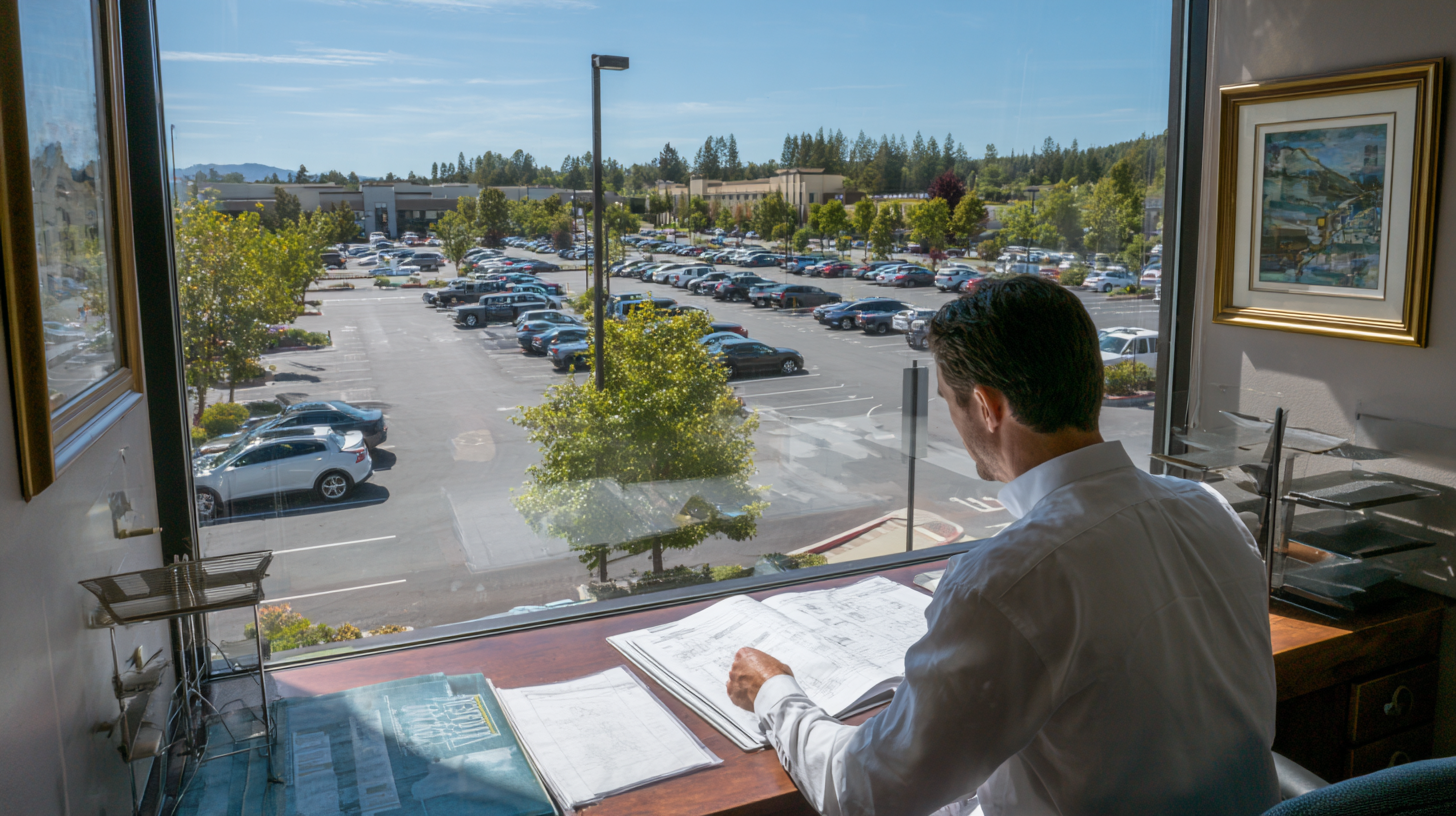
Commercial pavement is often one of the largest—and most overlooked—capital assets on a property. Parking lots, drive lanes, loading areas, and access roads all play a direct role in safety, operations, and tenant satisfaction. Yet many organizations still address pavement issues reactively, fixing problems only when visible failures occur.
A multi-year pavement budget shifts pavement management from short-term fixes to long-term financial planning. By treating pavement as a depreciating asset with predictable needs, commercial property stakeholders can control costs, reduce disruptions, and extend surface life.
Why Reactive Pavement Spending Leads to Higher Costs
Emergency Repairs vs. Planned Maintenance
Reactive pavement spending is typically triggered by failure—potholes, trip hazards, or drainage problems that can no longer be ignored. Emergency repairs often cost more due to expedited scheduling, limited contractor availability, and temporary fixes that don’t address root causes.
Planned maintenance, on the other hand, allows work to be scoped properly and completed at the optimal time. This approach prioritizes durability and value rather than urgency.
Operational Disruption and Tenant Impact
Unplanned pavement repairs can disrupt daily operations. Lane closures, restricted parking, and noise complaints affect tenants, customers, and staff alike.
By budgeting across multiple years, property managers can schedule work during low-traffic periods, communicate plans in advance, and minimize operational impact.
Budget Volatility and Surprise Expenses
Reactive spending creates unpredictable budget swings. One year may require minimal pavement spending, followed by a sudden six-figure repair due to deferred maintenance.
Multi-year budgeting smooths these fluctuations by spreading costs over time and reducing the likelihood of unexpected capital expenditures.
Understanding Pavement as a Depreciating Asset
Typical Commercial Pavement Lifecycle Stages
Commercial asphalt pavement follows a predictable lifecycle, much like roofing or HVAC systems. Each stage presents opportunities for cost-effective intervention.
Common lifecycle stages include:
Initial construction and curing
Early service life with minimal defects
Surface wear and minor cracking
Accelerated deterioration if maintenance is deferred
Structural failure requiring reconstruction
Understanding where a pavement section falls within this cycle is key to effective budgeting.
Environmental and Traffic Factors That Affect Lifespan
Not all pavements age at the same rate. Environmental exposure and usage patterns significantly influence deterioration.
Factors that impact pavement life include:
Freeze-thaw cycles common in New Jersey
Heavy truck or delivery traffic
Poor drainage or standing water
Sun exposure and oxidation
Subgrade strength and compaction quality
These variables should be considered when forecasting maintenance needs.
The Financial Value of Early Intervention
Early interventions—such as crack sealing or targeted patching—are significantly less expensive than structural repairs. Addressing minor issues before water infiltrates the pavement base can delay major rehabilitation by years.
From a financial standpoint, early action preserves asset value and improves return on investment.
Using Inspection Data to Drive Smart Budgeting
Condition Assessments and Documentation Methods
Accurate budgeting starts with consistent pavement inspections. Visual assessments, photographic documentation, and condition scoring provide a baseline for decision-making.
Effective documentation typically includes:
Crack severity and pattern mapping
Surface distress identification
Drainage observations
Previous repair history
Estimated remaining service life
This data forms the foundation of a defensible multi-year budget.
Identifying Surface Issues vs. Structural Failures
Not all pavement problems indicate structural failure. Surface-level issues can often be corrected without major reconstruction.
Surface-related concerns may include:
Hairline cracking
Minor raveling
Isolated potholes
Structural failures often involve widespread cracking, settlement, or base instability. Differentiating between these conditions ensures funds are allocated appropriately.
Tracking Pavement Performance Year Over Year
Annual or biennial inspections allow property teams to track how pavement conditions change over time. This trend data helps validate maintenance strategies and refine future budgets.
Tracking performance also improves forecasting accuracy and supports long-term capital planning discussions.
Prioritizing Maintenance, Rehabilitation, and Replacement
When Minor Repairs Are Sufficient
Minor repairs are ideal when pavement is generally sound but shows early signs of wear. These actions are cost-effective and help preserve structural integrity.
Typical minor repairs include:
Crack sealing
Small-area patching
Localized drainage corrections
These measures are best suited for pavements still in the early to mid stages of their lifecycle.
When Resurfacing Extends Asset Life
Resurfacing becomes appropriate when surface distress is widespread but the underlying structure remains intact. A new asphalt overlay can restore performance and appearance while extending service life.
Resurfacing is often more economical than reconstruction when timed correctly.
When Full Reconstruction Is the Better Investment
Reconstruction is warranted when structural failure is present. Continuing to repair severely deteriorated pavement often leads to escalating costs without lasting results.
While reconstruction requires higher upfront investment, it may offer the lowest long-term cost when repeated repairs are no longer effective.
Phasing Projects to Reduce Disruption
Dividing Large Properties into Manageable Sections
Large commercial properties rarely need all pavement areas addressed at once. Phasing work by zone allows costs and disruptions to be spread across multiple years.
Phasing strategies may be based on:
Traffic intensity
Pavement condition
Tenant usage patterns
This approach aligns well with multi-year budgeting models.
Scheduling Around Tenant and Operational Needs
Phased planning allows pavement work to be scheduled around peak business periods, seasonal operations, or known tenant events.
Advance scheduling improves coordination and reduces complaints or lost revenue due to access limitations.
Seasonal Considerations for Planning Work
Seasonal weather plays a critical role in pavement performance and construction quality. Planning ahead ensures work is completed during appropriate temperature windows.
In New Jersey, spring through fall typically provides the best conditions for most asphalt work, reinforcing the need for advance budgeting and scheduling.
Forecasting Capital Expenditures Over a 3–5 Year Horizon
Building Predictable Annual Budget Ranges
Rather than budgeting for individual projects, multi-year planning focuses on annual spending ranges. This approach provides flexibility while maintaining financial control.
Predictable ranges allow finance teams to plan reserves and avoid budget shocks.
Avoiding Large One-Time Capital Shocks
Deferred pavement maintenance often leads to sudden, large capital expenses. Spreading projects across multiple years reduces financial strain and improves cash flow management.
This strategy is especially valuable for HOAs and multi-property portfolios.
Aligning Pavement Projects With Broader Property Improvement Plans
Pavement work should be coordinated with other capital improvements such as lighting upgrades, landscaping, or drainage improvements.
Aligning projects improves efficiency, reduces redundant mobilization costs, and enhances overall site performance.
How Structured Pavement Planning Improves Financial Performance
More Accurate Long-Term Forecasting
Multi-year pavement budgets provide clarity for both operational and capital planning. Forecasts based on condition data are more reliable than reactive estimates.
This accuracy supports better decision-making at the executive and board levels.
Lower Total Lifecycle Costs
Well-timed maintenance and rehabilitation reduce the need for premature reconstruction. Over the full lifecycle of the pavement, structured planning consistently results in lower total costs.
This long-term view maximizes asset value while minimizing waste.
Extending Pavement Lifespan Through Strategic Timing
Strategic timing is one of the most powerful tools in pavement management. Addressing issues at the right moment can add years to pavement life at a fraction of replacement cost.
A multi-year budget ensures those opportunities are not missed.